Wednesday, September 20, 2023

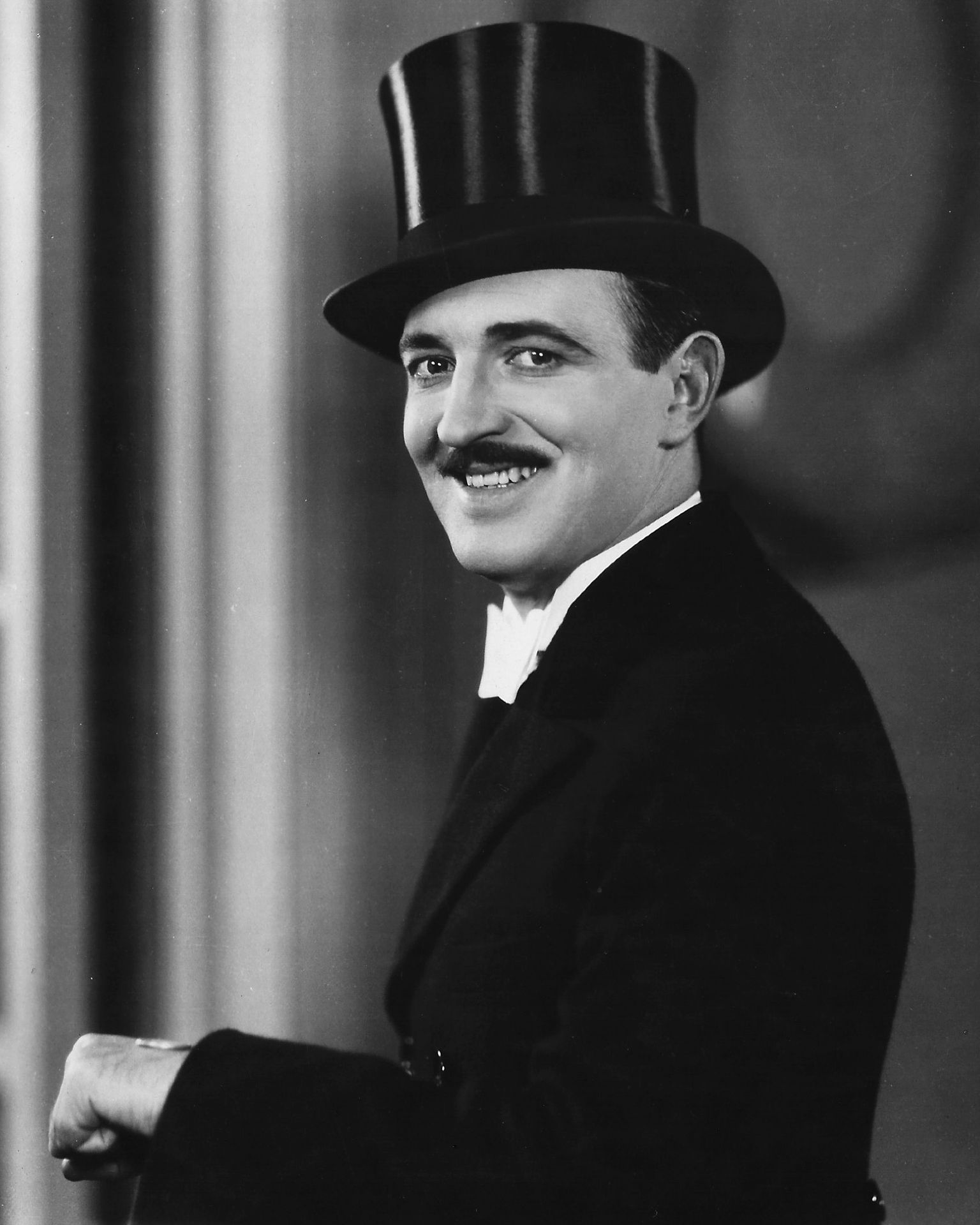
Celebrating Raymond Griffith, the Silk Hat Comedian

Raymond Griffith
Today, Film International published my new article, "The Unexpected Raymond Griffith." Please take a look.

My piece is a review of Raymond Griffith: The Silk Hat Comedian, a new two disc set from Undercrank Productions. This new DVD / Blu-ray release includes two of what are considered the comedic actor’s best films, Paths to Paradise (1925), and You’d Be Surprised (1926). As I state in my review, "The former is a minor masterpiece, the latter a small gem." I greatly enjoyed watching each.

As I mention in my review, both Paths to Paradise and You’d Be Surprised are presented in new 2K digital restorations of archival 35mm prints preserved by the Library of Congress, and each feature a new musical score by Ben Model. Also included on the disc is an informative twelve-minute video essay about Griffith by Steve Massa that uses film clips and still photos to outline the comedian’s life and career. Despite its brevity, it’s a very good introduction to Griffith that might be worth watching first – as it tips viewers to Griffith’s talents.

Raymond Griffith's may be a name familiar to at least a few fans of Louise Brooks -- at least who read the credits, as I do. Raymond Griffith, in fact, was one of the writers of God's Gift to Women (1931), Brooks' best talkie. I think his wit, the kind of wit and dry humor found in both Paths to Paradise, and You’d Be Surprised, is evident in God's Gift to Women, which was directed by Michael Curtiz.


Recently, I wrote a program essay for the Cleveland Silent Film Festival. I wrote about the silent version of All Quiet on the Western Front (1930), a film I was greatly impressed by and which I feel is more effective than the better known sound version. Coincidentally, Raymond Griffith had a bit part in that masterpiece. In his final acting credit, Griffith plays the French soldier Paul -- the hero of Lewis Milestone film -- attempts to kill, and then to help. It was a moving scene.

Lew Ayres and Raymond Griffith in a scene from
All Quiet on the Western Front.

THE LEGAL STUFF: The Louise Brooks Society™ blog is authored by Thomas Gladysz, Director of the Louise Brooks Society  (www.pandorasbox.com). Original contents copyright © 2023. Further unauthorized use prohibited. As an Amazon Associate, I earn from qualifying purchases.
Thursday, September 7, 2023

A chocolate Louise Brooks appears on UK TV

News broke the other day when a chocolate Louise Brooks showed up on "Bake Off: The Professionals," a UK television show.

According to an article in the Daily Mail, "The chefs wowed the judges Benoit Blin and Cherish Finden during the 1920s themed week, delighting them with their chiffon pie as well as their enormous showstopper centrepiece."

Check out the above linked article for even more images of this delicious piece, which must be seen tasted to be believed.

THE LEGAL STUFF: The Louise Brooks Society™ blog is authored by Thomas Gladysz, Director of the Louise Brooks Society  (www.pandorasbox.com). Original contents copyright © 2023. Further unauthorized use prohibited. As an Amazon Associate, I earn from qualifying purchases.

Saturday, September 2, 2023

A Spanish caricature of Louise Brooks

Here is a scan of one of my new treasures, which I decided to share.... a Spanish caricature of Louise Brooks dating from around 1931. I found it for sale on a Spanish website and decided to purchase it, as I had not seen it before. The text at the bottom references a couple of Brooks' American silents, like Love Em and Leave Em and Rolled Stockings, as well as her role in Prix de beaute. I like it, don't you!


THE LEGAL STUFF: The Louise Brooks Society™ blog is authored by Thomas Gladysz, Director of the Louise Brooks Society  (www.pandorasbox.com). Original contents copyright © 2023. Further unauthorized use prohibited. As an Amazon Associate, I earn from qualifying purchases.

Friday, August 11, 2023

A Girl in Every Port Screens in Australia

A Girl in Every Port, the 1928 Howard Hawks silent starring Louise Brooks, will be shown in Australia on Saturday, August 12th. The film will be shown at the The Majestic Theatre, 3 Factory Street Pomona, QLD, 4568. More information about the event can be found HERE


I wonder what print they are using? The event description states:

"Spike (McLaglen) travels the world as the mate of a schooner He has a little address book full of sweethearts, but everywhere he goes, he finds that someone has been there before him, leaving behind with each girl a heart-shaped charm with an anchor inscribed on it. In Central America, he takes a dislike to another sailor, Salami (Armstrong), but before they can settle their differences, they brawl with the police and are thrown in jail.

Stars Victor McLagen, Louise Brooks & Robert Armstrong

Doors & Bar open 11am. Coffee tea drinks & snacks available. $15 adults & kids 13 and under free. No need to book. Get your tickets at the door."


THE LEGAL STUFF: The Louise Brooks Society™ blog is authored by Thomas Gladysz, Director of the Louise Brooks Society  (www.pandorasbox.com). Original contents copyright © 2023. Further unauthorized use prohibited. As an Amazon Associate, I earn from qualifying purchases. 

Monday, August 7, 2023

The Street of Forgotten Men: From Story to Screen and Beyond

My new book, The Street of Forgotten Men: From Story to Screen and Beyond, has just been published and is now available on amazon.com and other websites. More information and a link to purchase may be found HERE.

There is much to recommend about The Street of Forgotten Men, which was both a popular and critical success at the time of its release. The film is based on a story by a noted writer of the time; it was made by a significant director, shot by a great cinematographer, and features a fine cast which includes a future screen legend at the very beginning of her career. Altogether, there are many points of interest. My book is a deep dive into the history of one film - its literary source, its making, its critical reception, and its surprising, little-known legacy. It is the primary intention of this book to show how one film might be exemplary of film-making and film culture during the silent era.

However, there is more to this story.... One of John Donne's famous poems begins "No man is an island entire of itself; every man / is a piece of the continent, a part of the main". To me, what Donne's verse says about humanity is what I believe about significant works of art, including films. Everything is connected in some way, in that nothing is created in a vacuum. I have kept Donne's lines in mind while writing this book. If anything, this book achieves one thing - it places
The Street of Forgotten Men in the rich cinematic and cultural context of its time. Does such a context elevate this particular film as a work of art, or as a cinematic achievement? Not necessarily. But then, that was not my goal.
 
I had long thought of writing a book about
The Street of Forgotten Men, and have been unknowingly gathering material for years, if not decades .... With the film's restoration, it should begin to make its way into the stream of available films. I hope this book prompts the interest of film buffs and film scholars alike, and acts as a companion work for those who have the opportunity to see the film. I also wrote this book for another reason, because it is a book I would like to read about this or any film. Does it matter that The Street of Forgotten Men is a lesser film in the larger scheme of things, or in the history of film? No. Because, no film is an island.

The book's description reads: 

The Street of Forgotten Men: From Story to Screen and Beyond is a deep dive into the history of a single film - its literary source, its making, exhibition history, critical reception, and, most surprising of all, its little known legacy. Few film titles become a catchphrase, let alone a catchphrase which remained in use for half-a-century and resonated throughout American culture. The Street of Forgotten Men (1925) is one such film.

This provocative stab at realism was described as "strange" and "startling" at the time of its release.
The Street of Forgotten Men was directed by Herbert Brenon, who is best known for Peter Pan, The Great Gatsby, Beau Geste, Laugh, Clown, Laugh and other early classics. The film was shot by Harold Rosson, one of the great cinematographers whose credits include Gone with the Wind and Singin' in the Rain. And, it features a stellar cast (Percy Marmont, Mary Brian, Neil Hamilton) which includes a future screen legend at the very beginning of her career (Louise Brooks).

The Street of Forgotten Men: From Story to Screen and Beyond tells the story of the film in rich, historical detail. As this book shows, this forgotten gem is exemplary of film making & film culture in the mid-1920s. Along with vintage clippings and unusual images - including rare production stills and location shots, this new book features all manner of historical documents including the short story on which the film was based, the scenario, a rare French fictionalization, newspaper advertisements, lobby cards, posters, and more. Among the book's many revelations:

-- Multiple accounts of the making of the film - suggesting what it was like on the set of a silent film.
-- A survey of the film's many reviews, including one by the Pulitzer Prize winning poet Carl Sandburg, another by a contributor to Weird Tales, and another by Catholic icon Dorothy Day, a candidate for sainthood.
-- Newly revealed identities of some of the film's bit players - a noted journalist, a future screenwriter, a soon to be famous actress, and a world champion boxer - which include accounts of their working on the film. There is also the story of Lassie's role in the film (no, not that Lassie, the first screen Lassie).
-- A look at the music associated with this silent film: the music played on set, the music depicted in the film, the music heard before the film was shown, and the music played to accompany the film itself (including the rare Paramount cue sheet and an alternative score).
-- And more... from the film's censorship records to its mention on the floor of Congress to its showing in multiple churches to its purchase by the United States Navy to a notice for the film's last documented public screening - at, of all places, a Y.M.C.A. in Shanghai, China in 1931 - six years after its release!

The Street of Forgotten Men: From Story to Screen and Beyond includes dozens of illustrations and images and features two forewords; one is by noted film preservationist Robert Byrne, whose restoration of The Street of Forgotten Men saved it from undeserving obscurity. The other, by acclaimed film historian Kevin Brownlow, is an appreciation of Herbert Brenon which reveals little known details about the movie drawn, in part, from his correspondence with Louise Brooks.

THE LEGAL STUFF: The Louise Brooks Society™ blog is authored by Thomas Gladysz, Director of the Louise Brooks Society  (www.pandorasbox.com). Original contents copyright © 2023. Further unauthorized use prohibited. As an Amazon Associate, I earn from qualifying purchases. 

Saturday, August 5, 2023

The Street of Forgotten Men screens at the Museum of Modern Art in New York

The Street of Forgotten Men will be shown on August 7th at the Museum of Modern Art in New York. The special screening of the recent restoration of the film, will feature a special musical accompaniment by Donald Sosin. More information about this event can be found HERE.

As just about any Louise Brooks fan might know, The Street of Forgotten Men  is a 1925 film which marks Brooks' screen debut. Even though her on screen time is just a couple of minutes, this Herbert Brenon film is well worth seeing. I could say more, but much of wat I could say can be found in my just about to be published book, The Street of Forgotten Men: From Story to Screen and Beyond.

The NY MOMA website states:

"The Street of Forgotten Men. 1925. USA. Directed by Herbert Brenon. Screenplay by Paul Schofield, John Russell. With Percy Marmont, Mary Brian, Neil Hamilton, Louise Brooks. Restored by the San Francisco Silent Film Festival, from a print held by the Library of Congress. 76 min.

Herbert Brenon’s 1925 urban melodrama holds its place in film history as the first screen appearance of Louise Brooks, unbilled but unmistakable as a gangster’s moll whose sudden appearance enlivens the film’s final reel. Brenon, one of the most acclaimed directors of the ’20s (Beau Geste, A Kiss for Cinderella) here works with material that might have been written for Lon Chaney and Tod Browning: Easy Money Charley (Percy Marmont) makes a solid living posing as a one-armed amputee begging along the Bowery, but his heart of gold is awakened when a dying prostitute asks him to look after her young daughter—who quickly grows into beautiful Mary Brian, causing problems for everyone involved. The film was shot largely at Paramount’s Astoria studios, with a couple of side trips to Fifth Avenue."


THE LEGAL STUFF: The Louise Brooks Society™ blog is authored by Thomas Gladysz, Director of the Louise Brooks Society  (www.pandorasbox.com). Original contents copyright © 2023. Further unauthorized use prohibited. As an Amazon Associate, I earn from qualifying purchases.

The Canary Murder Case, co-starring Louise Brooks, coming on DVD

Coming this fall from Kino Lorber: the 1929 William Powell / Louise Brooks ' film, The Canary Murder Case, will be released on DVD by Kino Lorber Classics as part of a three-film Philo Vance Collection. I assume this is the sound version, not the silent version. Further details to come.


THE LEGAL STUFF: The Louise Brooks Society™ blog is authored by Thomas Gladysz, Director of the Louise Brooks Society  (www.pandorasbox.com). Original contents copyright © 2023. Further unauthorized use prohibited. As an Amazon Associate, I earn from qualifying purchases.

Wednesday, May 24, 2023

It's the Old Army Game, co-starring Louise Brooks, was released on this day in 1926

It's the Old Army Game, co-starring Louise Brooks, was released on this day in 1926. The film is a comedy about a small town druggist (played by W.C. Fields) who gets involved with a real estate scam. Louise Brooks plays the druggist’s assistant. The film was Brooks’ fourth, and it reunited her with the Fields, the film’s star. The two had worked together in the Ziegfeld Follies of 1925.


In its review, the Newark Star-Eagle stated, “This picture not only affords a good deal of typical Fields comedy in a suitable story frame, but also reveals the possibilities of Louise Brooks, Follies girl who is making decidedly good in the cinema. . . . All told, Fields need not regret his first Paramount production. Louise Brooks, with a touch of piquancy, a good range of registration, and the conception of restraint, is pleasing as the heroine.”

It’s the Old Army Game was originally announced as starring Fields and future “It girl” Clara Bow, but she was shooting Mantrap (1926), so the female lead fell to Brooks. Exhibitor’s Herald stated, “Louise Brooks is the other important person in the picture and, as insinuated rather bluntly on the occasion of her first appearance — in The American Venus — she’s important. Miss Brooks isn’t like anybody else. Nor has she a distinguishing characteristic which may be singled out for purposes of identification. She’s just a very definite personality. She doesn’t do much, perhaps because there isn’t much to do but probably because she hits hardest when doing nothing, but nobody looks away when she’s on screen. If Miss Glyn should say that Miss Brooks has ‘it,’ more people would know what Miss Glyn is raving about. But in that case she would not be raving.”

The Portland Oregonian noted “Louise Brooks, the pert young woman who will be remembered for her work in The American Venus and A Social Celebrity, the latter with Adolphe Menjou, has the lead role opposite Fields. She poses a bit. An excuse was found to get her into a bathing suit too, which wasn’t a bad move, on the whole.” 

It’s the Old Army Game received mostly positive reviews, though some critics noted its rather thin plot. Algonquin Round Table playwright Robert E. Sherwood (who would go on to win four Pulitzer Prizes and an Academy Award) was then writing reviews for Life magazine. His pithy critique read, “Mr. Fields has to carry the entire production on his shoulders, with some slight assistance from the sparkling Louise Brooks.” Ella H. McCormick of the Detroit Free Press countered with Fields scored a splendid triumph in this picture. A great part of the success of the offering, however, is due to Louise Brooks, who takes the lead feminine part.”

Today, It’s the Old Army Game is largely remembered as a starring vehicle for Fields — a comedic great, It is also remembered for the fact that not long after the film wrapped, Brooks married the film’s director, Eddie Sutherland.


Under its American title, documented screenings of the film took place in Australia (including Tasmania), Bermuda, British Malaysia (Singapore), Canada, Ireland, Jamaica, Japan, Korea, New Zealand, Panama, and the United Kingdom (England, Isle of Wight, Northern Ireland, and Scotland). In Czechoslovakia, the film was promoted under the title The Old Army Game. In Japan, it was once promoted as It’s the Old Army.

Elsewhere, It’s the Old Army Game was shown under the title El boticario rural (Argentina); Ein moderner Glücksritter (Austria); Een Apothekersstreek (Belgium); Risos e tristezas (Brazil); El Boticario Rural (Cuba); To je starí hra armády (Czechoslovakia); Miehen ihanne (Findland); Un Conte D’Apothicaire (France); チョビ髯大将 (Japan); Laimes spekuliantai (Lithuania); Un Conte d’hapoticaire! (Luxembourg); El Boticario Rural (Mexico); Pierewaaier Pilledraaier or De pillendraaier and De Dorpsapotheker (The Netherlands); Ungkar og spillemann (Norway); El boticario rural (Spain); Mannen som gör vad som faller honom in (Sweden); and El boticario rural (Uruguay).


SOME THINGS ABOUT THE FILM YOU MAY NOT KNOW:

 — Clarence Badger was originally assigned to direct, but the film was soon turned over to Edward Sutherland, a onetime actor and Keystone Cop who began his directing career just a few years before with the help of Charlie Chaplin. The film was announced, at first, as starring W.C. Fields and future “It girl” Clara Bow, but as she was needed on the West Coast to shoot Mantrap (1926), the female lead fell to Brooks. It’s the Old Army Game was the first of five Fields’ films directed by Sutherland.

— Outdoor scenes in Palm Beach, Florida were shot at El Mirasol, the estate of multi-millionaire investment banker Edward T. Stotesbury. In 1912, after having been a widower for thirty-some years, Stotesbury remarried and became the stepfather of three children including Henrietta Louise Cromwell Brooks (known simply as Louise Brooks), an American socialite and the first wife of General Douglas MacArthur. In her heyday, she was “considered one of Washington’s most beautiful and attractive young women”. Because of their names, the two women were sometimes confused in the press.

— Paramount had made other movies in Ocala, Florida – including scenes for the earlier Brooks’ film, The American Venus. (Brooks was likely not present on that occasion.)

 — Notably, It’s the Old Army Game marked the first film appearance of Elise Cavanna, who plays the nearsighted woman in search of a stamp.(She is the first character seen in the film.)  Cavanna started as a dancer (who reportedly studied under Isadora Duncan) and stage comedian before entering films in 1926. She appeared in another Brooks’ film, Love Em and Leave Em (1926), as well as four other films with Fields, most notably The Dentist (1932), where her scenes as a writhing patient in a dentist chair were deemed so risqué they were edited out of later television broadcasts.

— William Gaxton plays William Parker, Brooks’ love interest and the President of the High-and-Dry Realty Company. Born in San Francisco as Arturo Antonio Gaxiola, Gaxton worked mostly on stage, finding his greatest success in George Gershwin’s Of Thee I Sing (1933) and other Broadway musicals during the 1930s and 1940s. In Lulu in Hollywood, Brooks recounts what an entertaining person Gaxton was off camera, and how funny he was when he read aloud from Gentleman Prefer Blondes when the company wasn’t working or drinking; Brooks also speculates that Gaxton was bitter about what he regarded as his failure as an actor in It’s the Old Army Game — his first film, and role he thought would launch his film career.

THE LEGAL STUFF: The Louise Brooks Society™ blog is authored by Thomas Gladysz, Director of the Louise Brooks Society  (www.pandorasbox.com). Original contents copyright © 2023. Further unauthorized use prohibited. As an Amazon Associate, I earn from qualifying purchases.

SUPPORT the LOUISE BROOKS SOCIETY via PAYPAL

Powered By Blogger